

Career coaching is more than just career advice — it's a strategic investment in your personal and professional development. Whether you’re in a career rut, planning a transition, or aiming for advancement, the benefits of career coaching are often transformative and long-lasting. According to the International Coaching Federation, individuals who work with a career coach are significantly more likely to achieve their goals than those who go it alone. This article explores how career coaching can impact your career, where its limits lie, and how to know if it's the right move for you.
Career coaching is a goal-focused, structured process that helps individuals gain clarity, plan strategically, and build the confidence to take meaningful action in their careers. A career coach acts as a professional partner — someone who listens, asks powerful questions, provides feedback, and helps you identify blind spots. Through assessments, strategic frameworks, and thoughtful dialogue, career coaches help you transform vague aspirations into concrete goals with defined outcomes.
This process is not about handing you a ready-made solution. It’s about empowering you to discover and define your own version of success. A skilled career coach creates a safe space for reflection, while also providing the accountability needed to move forward. For many professionals, that combination of insight and structure is what finally breaks the cycle of indecision or inaction.
Career coaching is often confused with other forms of support, but it’s uniquely positioned to address career-specific challenges:
Career coaching stands apart by offering tactical guidance on career transitions, goal-setting, skill development, and performance improvement — all with a future-focused approach rooted in action.
To fully appreciate the value of coaching, it’s just as important to understand what a career coach isn’t. Misunderstandings about the coach’s role can lead to frustration or unmet expectations — especially when clients assume they’re signing up for something they’re not actually receiving.
Understanding what a coach doesn’t do sets the stage for a more rewarding and productive coaching relationship.
While virtually anyone can benefit from career coaching, it’s especially valuable for individuals at key inflection points:
Career coaching also supports high-performers aiming for continued growth, as well as entrepreneurs juggling diverse responsibilities. If you're building a coaching practice yourself, check out 12 Silent Mistakes That Can Destroy Your Coaching Business for practical advice on maintaining credibility and momentum.
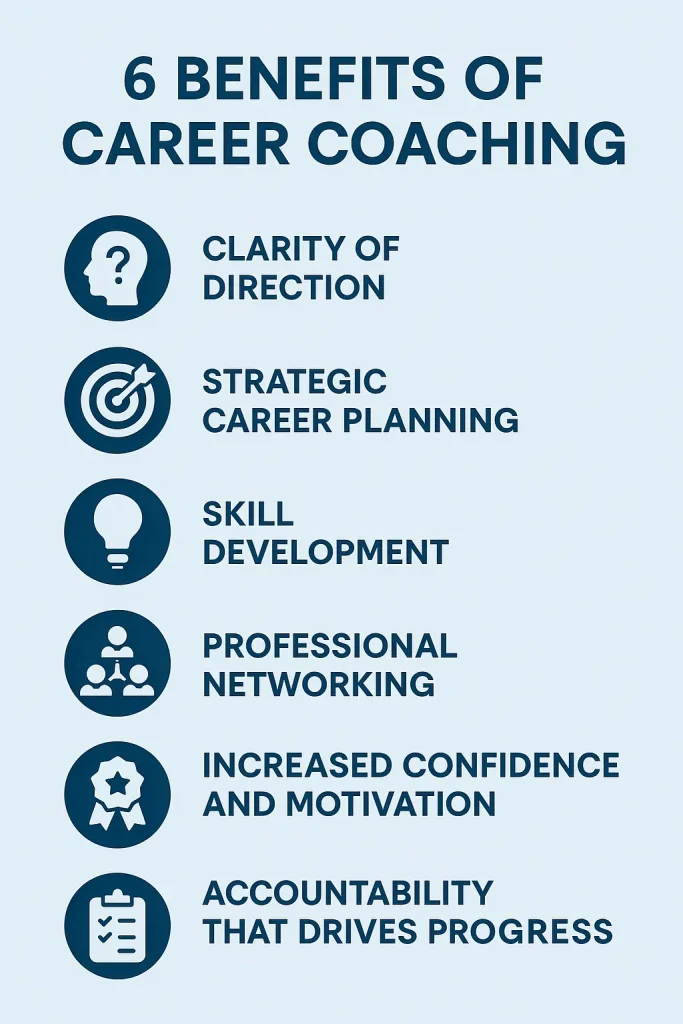
Many professionals drift through their careers reacting to circumstances instead of choosing a deliberate path. A career coach helps you uncover what truly matters — your values, strengths, and long-term goals. Through tools like vision exercises, career mapping, and values clarification, you can finally answer the question: What do I really want?
Rather than chasing short-term fixes, a coach helps you build a sustainable, long-term career roadmap. This may include identifying skill gaps, transitioning roles, or aligning with emerging industry trends.
Leading a team or business? Continuous Business Coaching: The Secret to Hitting Every Target You Set offers valuable frameworks for structured, ongoing support.
Coaches foster growth in critical areas like communication, leadership, emotional intelligence, and decision-making. They also help prepare you for high-stakes scenarios — such as interviews, presentations, or negotiations — through role-playing, critique, and actionable feedback.
Many professionals benefit not only from coaching sessions but also from their coach’s broader network. You’ll learn how to build professional relationships, seek out mentors, and position yourself as someone worth knowing.
A major benefit of coaching is mindset transformation. Many clients begin the journey burdened with self-doubt or fear of failure. Over time, coaching reveals strengths, builds belief, and encourages bold, intentional action.
It’s easy to lose momentum when going it alone. Career coaches keep you on track with consistent progress reviews, recalibrated goals, and motivating follow-up that ensures you stay aligned and energized.
Despite its many strengths, career coaching has boundaries:
Most importantly, coaching is not a substitute for therapy. While coaching is future-oriented, therapy addresses past trauma and emotional healing. If you’re struggling with anxiety, burnout, or unresolved mental health issues, consider pairing coaching with professional psychological support.
You may want to pause on career coaching if:
Career coaching is a collaborative process that requires honesty, commitment, and a willingness to stretch beyond your comfort zone.
Finding the right coach is critical. Consider asking:
A great coach will welcome your questions and guide you toward a good fit. If you're also looking to grow your coaching brand, check out The Secret Structure Behind Online Courses That Actually Work for creating impactful, scalable programs.
Career coaching is not about quick wins — it's about sustainable growth. When you work with the right coach and commit to the process, the ROI can be life-changing. Beyond titles and salaries, coaching delivers clarity, alignment, and confidence that propel long-term career fulfillment.
Take this quick self-assessment to determine if working with a career coach could be the game-changer you need.
Join a growing community of professionals and coaches who receive smart, actionable tips every week.
Subscribe to our newsletter and get your free Career Strategy Worksheet in the first issue.
Stay ahead, stay focused, and let your next career move be your best one yet.